Your metrics, in the dashboards your team already watches.
Emerjent pushes your operational metrics to your own Databox account on a schedule, push-not-pull, with no database to expose. Then it reads those metrics back through Databox to answer questions and track the numbers that map to your KPIs and your clients'.
Take the same numbers to where your team already looks.
Emerjent computes your operational metrics and pushes them to your own Databox account on a schedule. Push-not-pull means there's no database to expose and no credentials to hand around, your numbers just land in the dashboards your team already watches.
See how ROI attribution worksAsk your numbers a question. Get an answer drafted from real data.
Emerjent reads your Databox metrics back through Databox itself, so you can ask about your own operational numbers in plain language, and pull a client's funnel metrics into a performance report drafted from real figures and held for your review before anything goes out.
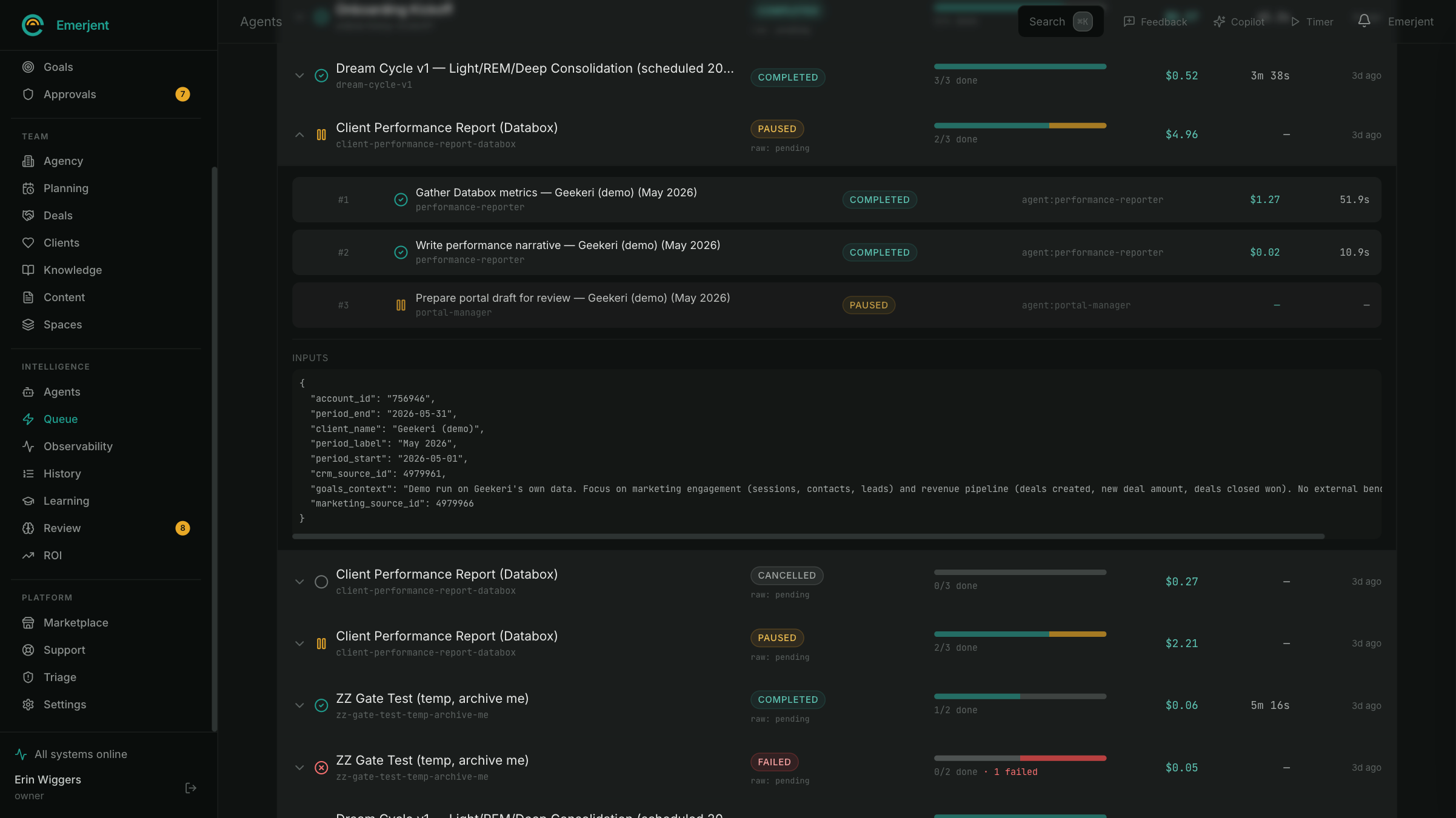
Push your metrics out, pull a client's metric back, and track it as a KPI.
The same connection runs both ways. Emerjent can pull a client's funnel metric back out of Databox and track it as a KPI in their portal, with a pace-aware status and a clean trend, scoped so the client sees the number and never the plumbing.
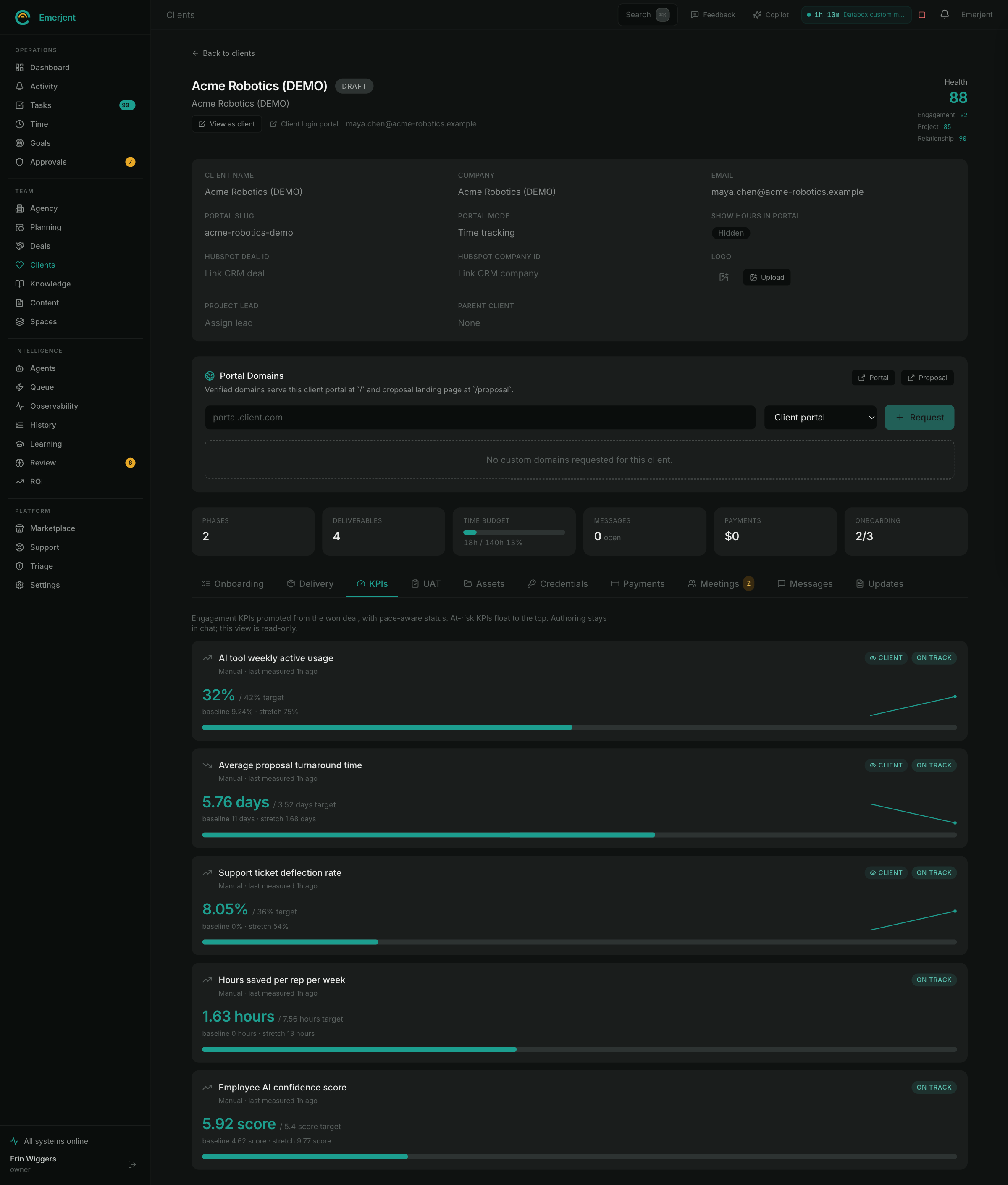
Push-not-pull
Emerjent sends your metrics to your Databox. It never reaches into a customer database.
Your account, your data
Metrics land in the Databox account you already own.
Org-scoped at the database
The same org guard sits in front of every data-sync write.
Configured from chat, part of how you run.
Like every capability on Emerjent, the Databox connection is configured from chat and travels as part of how you run, the same way a pack does.
See the Marketplace