Every agency has the same moment: the deal closes, the champagne (or the coffee) comes out, and then someone has to remember what onboarding actually looks like for this engagement. Which access do you need? Which forms? Which API keys? Most agencies rebuild this list from memory, from an old Google Doc, or from whatever the last account manager happened to save. That's not a process. That's a guess with good intentions.
The cost of rebuilding onboarding every time
When onboarding lives in someone's head or in a scattered folder of past templates, three things go wrong. First, steps get missed, like the API key rotation date that gets lost in a Slack thread and never makes it onto anyone's checklist. Second, the client experience is inconsistent. Engagement three feels more organized than engagement four, and clients notice. Third, 'we're waiting on the client for X' turns into a mental tally an account manager has to carry around instead of something the system tracks.
Emerjent addresses this directly: it auto-generates onboarding checklists tied to specific engagement types. Instead of starting from a blank page (or an outdated one), a new engagement inherits a checklist built for that kind of work, ready to tailor rather than invent.
Four step types, not one generic 'to-do'
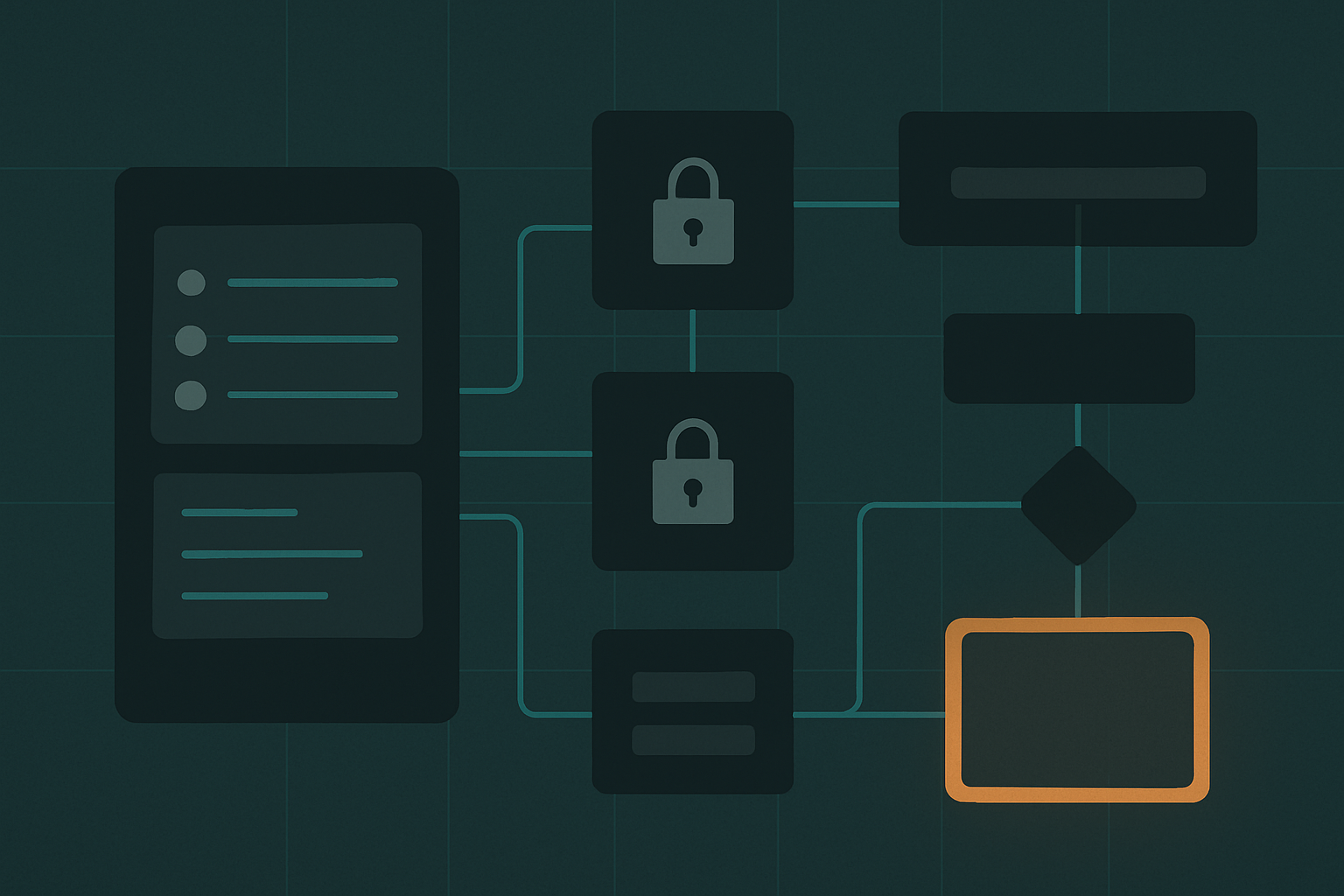
A real onboarding checklist isn't a flat list of vague tasks. Emerjent structures onboarding around four distinct step types, each carrying a clear signal of what the client actually needs to do:
- Info acknowledgment: confirm scope, timeline, or a policy the client needs to read and accept
- File upload: brand assets, prior reports, existing documentation
- Access-grant action: add a teammate, grant a permission, confirm a login
- Secure credential request: API keys, private app tokens, platform passwords
Treating these as one undifferentiated 'checklist item' is where most onboarding templates fall apart. A credential request needs different handling than a file upload. Emerjent's four-type structure means the client sees exactly what kind of action a step requires, and your team can wire different logic (and different security) to each type.
Turn checklist steps into requests the client actually sees
A checklist that only your team can see is a checklist that lives in your head. Emerjent changes that by letting you set a due date on any step, which turns it into an active inbound request. It shows up in the client's Action tab and stays there until it's fulfilled.
That one mechanism does a lot of work. 'We're waiting on you for the brand guidelines' stops being something an account manager tracks manually and starts being something the client sees every time they log in. You're not sending a follow-up email. The system already told them.
Credentials without the email thread
API keys and login credentials are the riskiest part of onboarding, and they're usually handled the worst way: pasted into an email, dropped in a Slack DM, or sent as a plain-text attachment. None of that is secure. All of it creates a paper trail nobody wants.
Emerjent wires credential steps directly to secure credential intake (portal_credential), so when a checklist step asks for an API key or a private app token, the client submits it through an encrypted channel built for that purpose, not through whatever messaging app happens to be open. The credential step type isn't cosmetic. It changes how the secret actually moves.
From signed deal to active engagement, automatically
The moment a proposal is accepted, an event-triggered chain fires in Emerjent, handing the deal to delivery with role assignments and kicking off onboarding in the same motion. The targets set during discovery get promoted onto the client record instead of getting re-typed by whoever picks up the account.
Onboarding itself closes out with a client-owned 'Complete onboarding' action. That's a deliberate design choice: the client confirms the checklist is done, not your team assuming it is. When that action fires, you know delivery is starting on a real foundation, not a partially-finished one.
What separates good onboarding from great onboarding
Good onboarding gets the paperwork done. Great onboarding leaves the client confident, speeds up the kickoff, and removes the manual handoff work nobody wants to own:
- Clarity: the client knows exactly what's required and why, without guessing which of five documents to send
- Speed: nobody's reinventing a checklist from scratch for the fifth time this quarter
- Automation: the handoff from 'deal closed' to 'work started' doesn't depend on someone remembering to kick it off
A generic PDF checklist emailed at kickoff hits none of these consistently. A checklist that's auto-generated for the engagement type hits all three: split into the right step types, visible to the client as active requests, and wired to secure credential intake. That's the difference.
A hypothetical walkthrough
Say an agency signs a new fractional marketing engagement. Instead of building a checklist from memory, the engagement type auto-generates one: an info step confirming scope and timeline, an upload step for brand assets, an access-grant step for the client's ad account, and two credential steps for the CRM and ad platform API keys. Due dates go on all five steps. The client sees five items in their Action tab, not a scattered email chain. The two credential steps route straight into secure intake. When the client checks the last box, the 'Complete onboarding' action fires, and delivery picks up the engagement with everything already in place. This is exactly what happens when you wire onboarding to event triggers and credential intake.
Onboarding shouldn't be the part of the engagement that makes clients wonder if you have your act together. It should be the first proof that you do.