
What a Discovery Call Actually Is (For Agencies)
A discovery call is the conversation before the pitch. You're not selling yet. You're finding out if there's a real problem, a real budget, and a real timeline to solve for. For an agency, that 30 to 45 minutes decides scope, price, and whether the engagement has a shot at working in the first 90 days.
Get it wrong and you scope a project against a problem the client didn't actually describe. Get it right and the proposal practically writes itself.
Discovery Call vs. Everything Else Called 'Discovery'
When we say 'discovery call' here, we mean the first substantive conversation with a prospect where you qualify fit before proposing. Not intake interviews, not therapy consults, not job interview prep. That distinction changes what questions belong on the call.
The Core Discovery Questions (And Why Order Matters)
Good discovery calls move in a consistent shape:
→ Context: what does their business look like right now, and where do they sit in it? ('Are you running deals through a spreadsheet or a CRM, and how many reps touch that process?') → Pain points: what's broken, slow, or costing them money? ('Is the real problem pipeline visibility, deal velocity, or deal accuracy?') → Next steps: what happens if this doesn't get fixed, and what does 'fixed' look like? ('If this isn't solved before your next board meeting, what does that cost you?')
Ask about pain before you ask about budget. Ask about budget before you ask about timeline. Reverse the order and you get vague answers, because the prospect hasn't had a chance to name the problem yet.
From Messy Transcript to Structured Signal
Here's where most agencies lose the thread. The call happens, someone takes rough notes or a transcript gets generated (Fireflies, a call recorder, whatever), and then it sits in a folder. Three days later, whoever's writing the proposal is reconstructing the conversation from memory.
Emerjent's deal_discovery capability ingests the discovery call transcript directly into the deal record instead of leaving it to memory. It extracts the discovery variables from the conversation: the stated pain points, the budget signals, the timeline mentions, the decision-maker context. Instead of a transcript you have to re-read, you get structured findings attached to the deal.
How Emerjent Scores Discovery Confidence
Discovery confidence scoring works by mapping what came out of the call against the SPICED framework (Situation, Pain, Impact, Critical Event, Decision) and producing a confidence score on the deal.
That score is the go or no-go signal before you invest in scoping. A call heavy on pain, impact, and a real critical event scores differently than a call where the prospect talked in generalities and never named a budget or a decision timeline. You don't move a deal into scoping on vibes. You move it because the transcript actually supports the fit.
A Worked Example (Hypothetical)
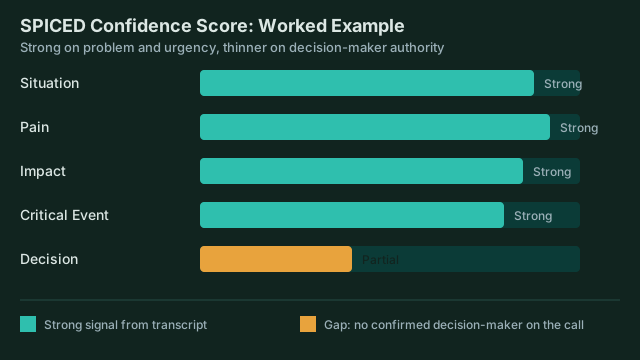 The worked example's SPICED confidence breakdown: strong across problem and urgency, thinner on decision-maker authority.
Say a 40-minute discovery call transcribes cleanly: the prospect names three specific pain points, mentions a rough budget range unprompted, and says they need something live before a board meeting next quarter. Run that transcript through deal_discovery and the extracted variables land across Situation, Pain, Impact, and Critical Event, with Decision only partially answered (there's a timeline, but no confirmed decision-maker on the call yet). The confidence score reflects that: strong on problem and urgency, thinner on authority.
Now you know the next call needs to bring in whoever signs off, not that you need to re-pitch the problem.
Idempotent Re-Processing, So You Can Run It Twice
Transcripts change: they get updated, corrected, or re-uploaded. You can reprocess the same call without worrying about duplicate findings polluting your deal record or double-counting the confidence score. The deduplication is built in, keyed to the input hash.
Where the Confidence Score Goes Next
You don't re-extract discovery data during scoping. The findings travel with the deal: the same data informs pricing, and the same data lands in your pipeline forecast. One transcript, processed once, feeds two downstream decisions instead of getting reconstructed twice.