Agents you can trust with the work.
Delegate real agency operations to AI agents from chat, then see exactly what ran, what it cost, and why.
Hand off the work, or let it run itself.
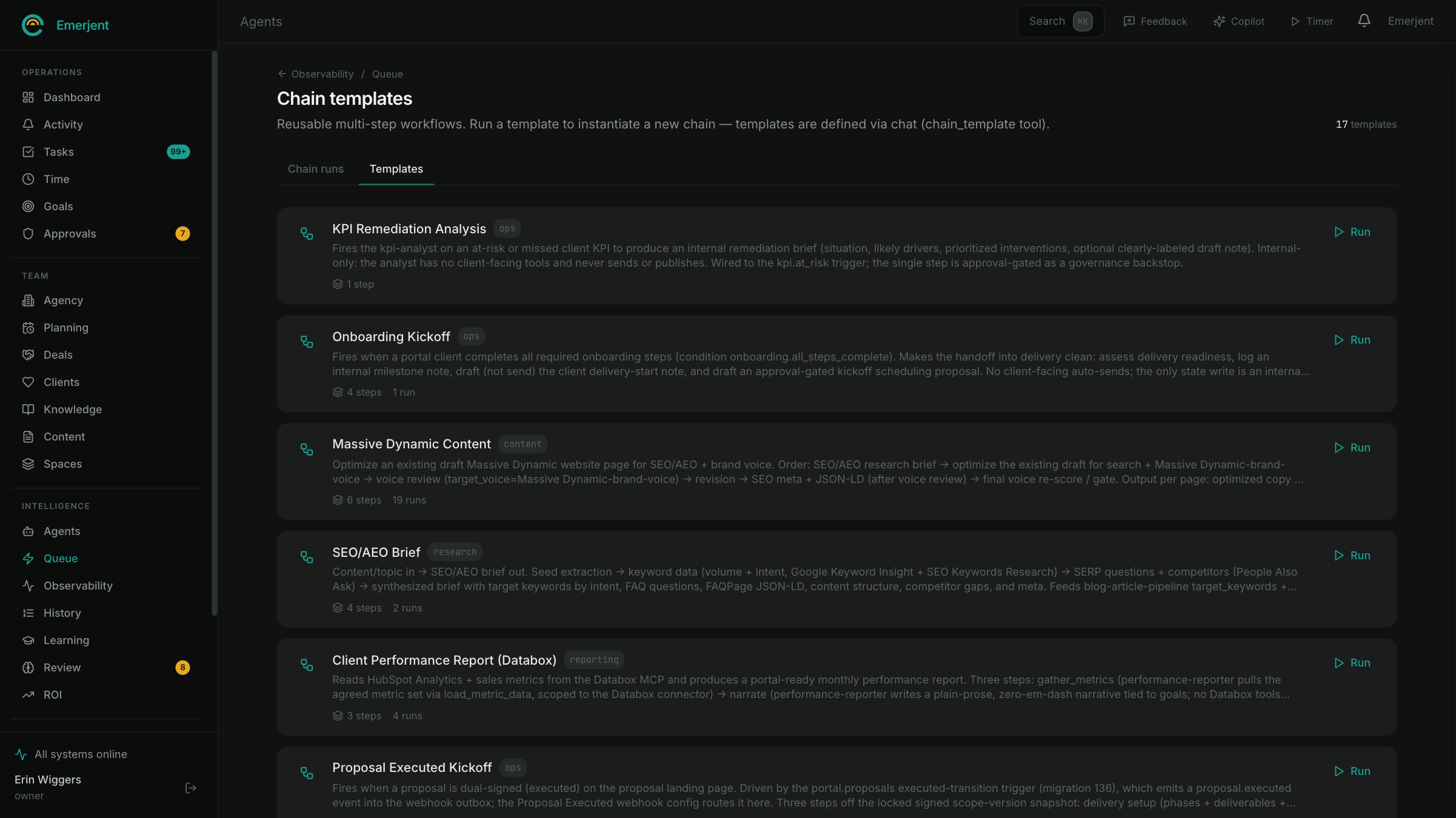
Run an agent on demand, schedule it on a cron expression, or sequence several with dependencies so each step waits for the last. Runs can also start on their own when something happens in your workspace, like a client finishing onboarding kicking off the next workflow, with an observe-first mode that shows you what they would do before anything fires for real. Results land in the knowledge base, so nothing is lost when the conversation ends. On long jobs, Emerjent can fold older context into a running summary, so the run stays coherent and the cost stays predictable.
Memory that sharpens with use.
Search by meaning, not keyword. Every decision, client insight, and lesson lands in a knowledge base that surfaces what's strongest now and links topics by shared themes. A new teammate gets up to speed from it instead of from your memory.
It proposes merging or retiring stale docs and you keep or undo each, so the base doesn't rot and nothing changes silently.
It also learns from your edits. When you correct an agent's work, that correction carries into later runs, and recurring corrections get distilled into house rules you approve before they ever apply. Nothing changes how your agents behave without your sign-off.

Nothing writes to live data without a check.
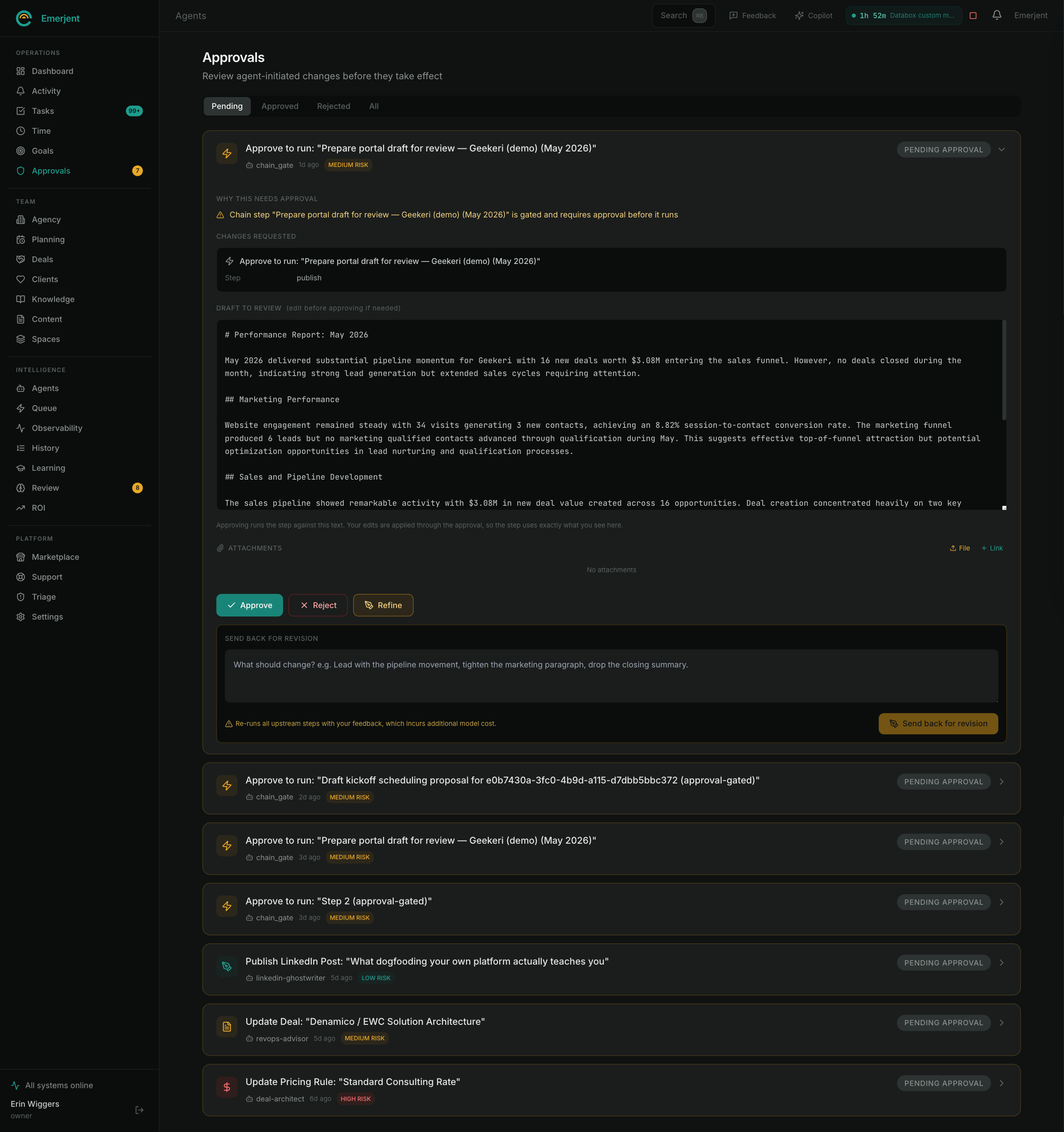
Write-intent review
Agent writes to live or client-facing data surface for review first, with the change and the reason. Set policies per action type, and everything is logged.
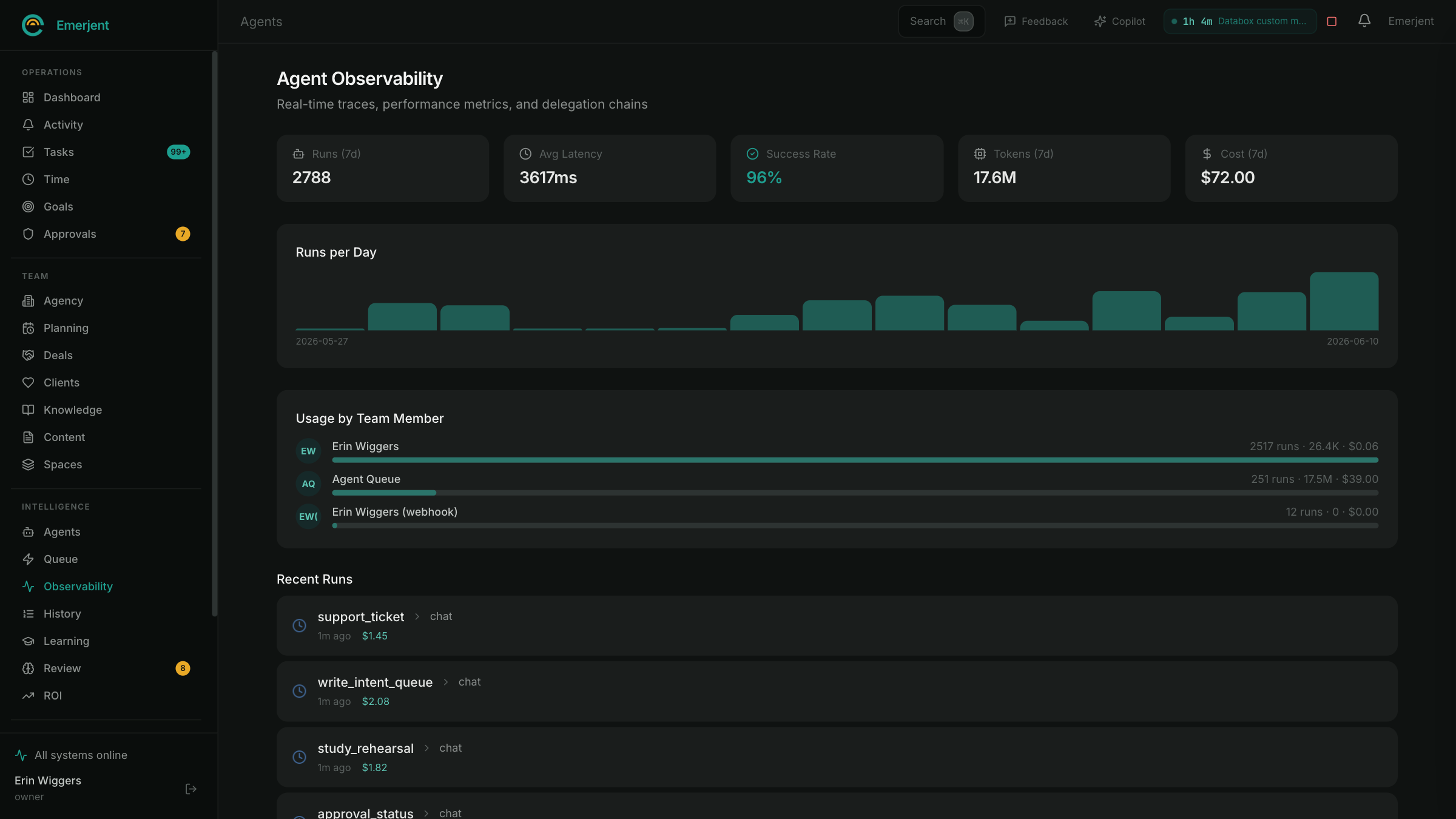
Full run traces
Every run is traced step by step, with the tool calls and latency, and cost attributed per run on the paths that route through an agent.

Live today. Your HubSpot activity syncs in on a schedule, tied to the right client and deal, and your operational metrics push out to your own Databox dashboards. More connectors are wired as partners come online.
Questions people ask about this.
What is an AI agent?
An AI agent is software that uses a language model to take actions, not just answer questions. On Emerjent, agents run real operations like pipeline reports, briefings, and content workflows against your actual data, on demand, on a schedule, or as workflows, with approvals gating anything client-facing.
What is the difference between an AI agent and a chatbot?
A chatbot answers; an agent acts. A chatbot returns text and forgets the conversation. An agent calls tools, writes results somewhere durable, and can run without you watching. Emerjent agents log every step, attribute cost per run, and pass a review gate before touching live data.
Can AI create and run workflows?
Yes. On Emerjent you connect agents into multi-step workflows with dependencies, schedule them on a cron, or trigger them from events in your workspace, like a client finishing onboarding. An observe-first mode shows what a trigger would do before anything fires for real.